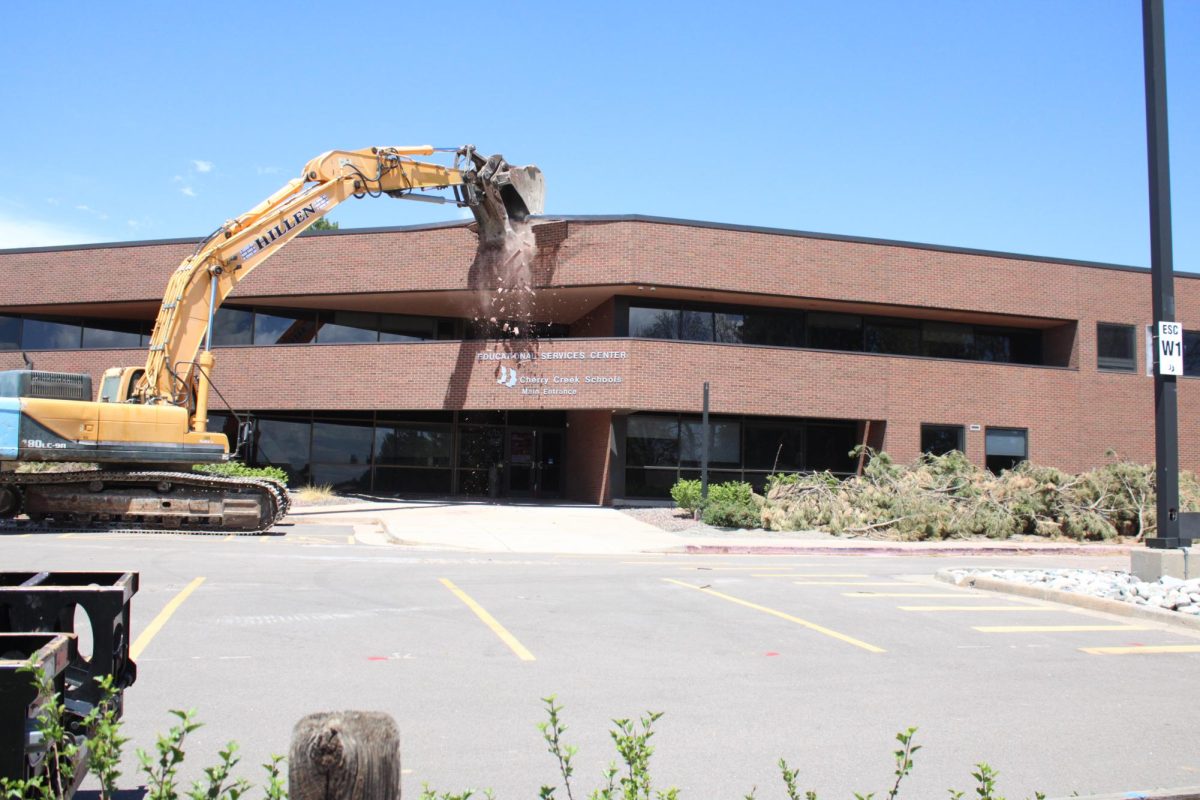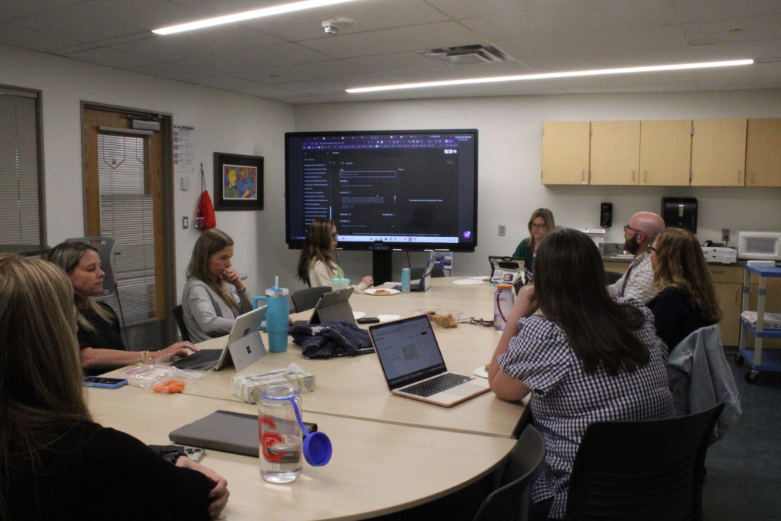
As the complete reconstruction of Creek’s campus looms nearer and nearer, and with demolition of district administrative buildings already underway, Creek’s EcoAction club is concerned that not enough attention is being paid to the possibility of a greener campus.
“We’re building something that, hopefully, will last 50, 60, 70 years,” senior EcoAction president Sophie Tipper said. “We need to address [sustainability] now while we have the funds for reconstruction. We need to be leaders and build sustainable infrastructure.”
While it may not meet Tipper’s or EcoAction’s hopes, environmental sustainability has very much been included in the conversation when designing the new campus.
“The project is being designed with a thoughtful focus on sustainability and long term environmental performance including the use of eco-friendly and responsibly sourced construction materials whenever feasible,” district Communications Director Ashley Verville said via email interview. “The project team is prioritizing materials that are durable, energy efficient, and have [smaller] environmental impacts over their life cycle.”
However, finances are a major factor in the design and material selection process.
“On an ongoing basis, the Cherry Creek School District strives to be environmentally friendly in its operations and construction projects as well as good stewards of taxpayer money,” Verville said. “In many cases it makes sense from an operational and fiscal perspective to pursue green initiatives such as using eco-friendly building materials, utilizing energy efficiency measures, and EV school buses.”
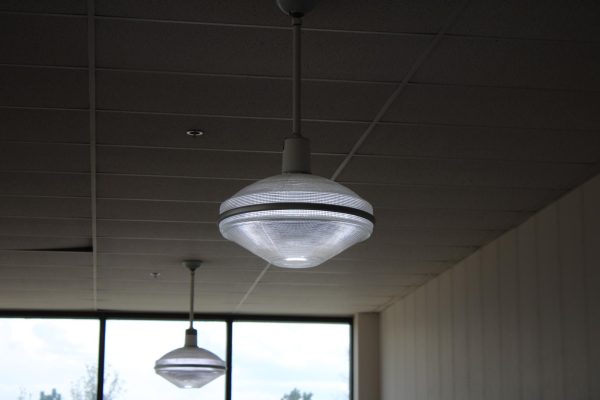
This does not mean that all solutions have been integrated into the blueprints.
“There’s no regard for solar panels specifically,” Tipper said. “We know that climate change is going to get worse, we know that energy prices are going to get higher.”
AP environmental science teacher Jeff Boyce advocates both a pragmatic financial approach and an ambitious attention to sustainability.
“There’s a concept that is taught in business called the triple bottom line,” Boyce said. “Instead of only looking at money, we need to balance environmental and [monetary] impact. We need to consider these other [options] as part of our decision-making process. It’s at the heart of the question of what do we, as a district, value?”
Practical options do exist that allow the balance of finances and sustainability, Boyce argues.
“If we design a net-zero building that generates its own energy (using geothermal and solar energy), the monthly operating costs can be greatly reduced,” Boyce said. “Gas and electricity [are] going to keep getting more expensive, so if you build a [campus] that generates its own electricity and heats and cools itself, then you can minimize the costs.”
While at the moment it is unclear if geothermal energy will be utilized, the district is paying attention to energy efficiency.
“While specific materials have not been fully fleshed out, CCSD has engaged in the Xcel EDA program, which provides energy modeling and incentives that helps identify energy saving strategies,” Verville said. “In recent years, the District has also pursued several energy efficiency upgrades, such as lighting and water use, that have helped to reduce energy costs across the District.”
In all, the district is confident that existing planned efforts (attending to both sustainability and energy efficiency) will not only be a major step up from the current Creek campus, but also attend to environmental concerns.
“The current Cherry Creek High School is more than 70 years old,” Verville said. “The opportunity to build a new school that is compliant with current building codes and incorporates the latest technology and eco-friendly materials will help ensure the new [campus is] more energy efficient.”