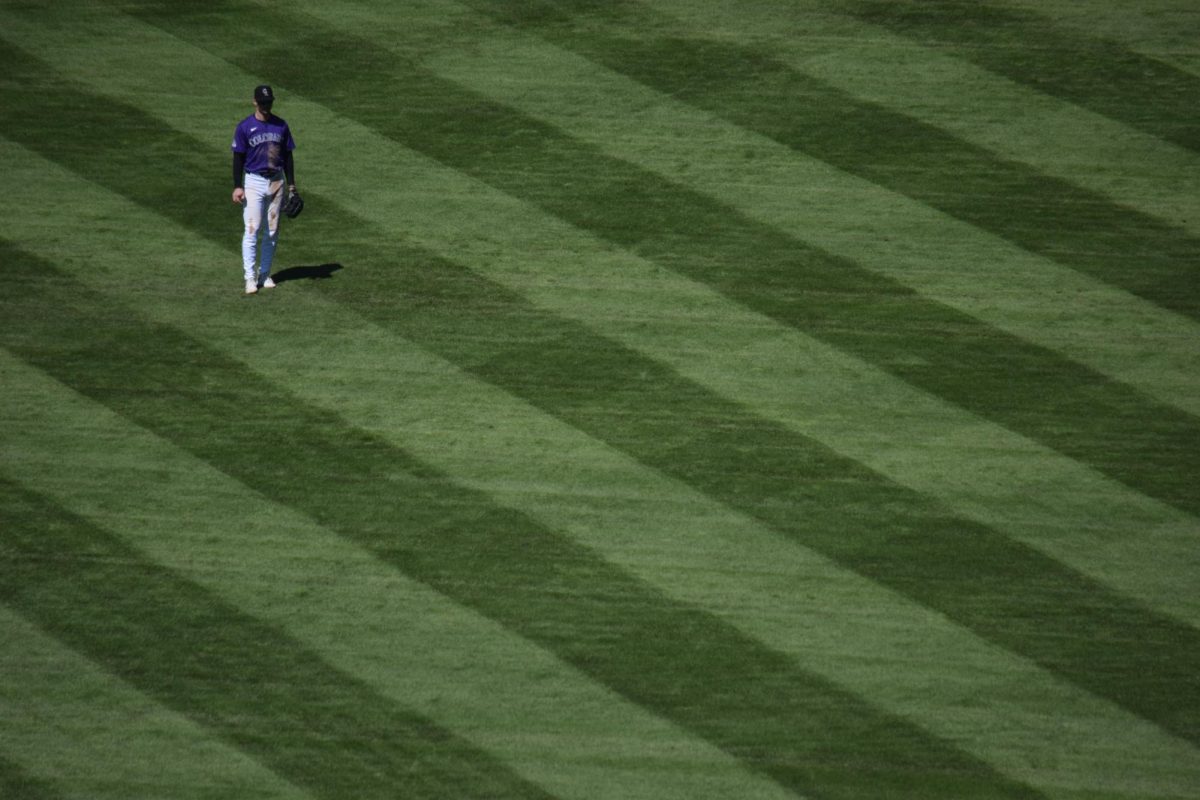
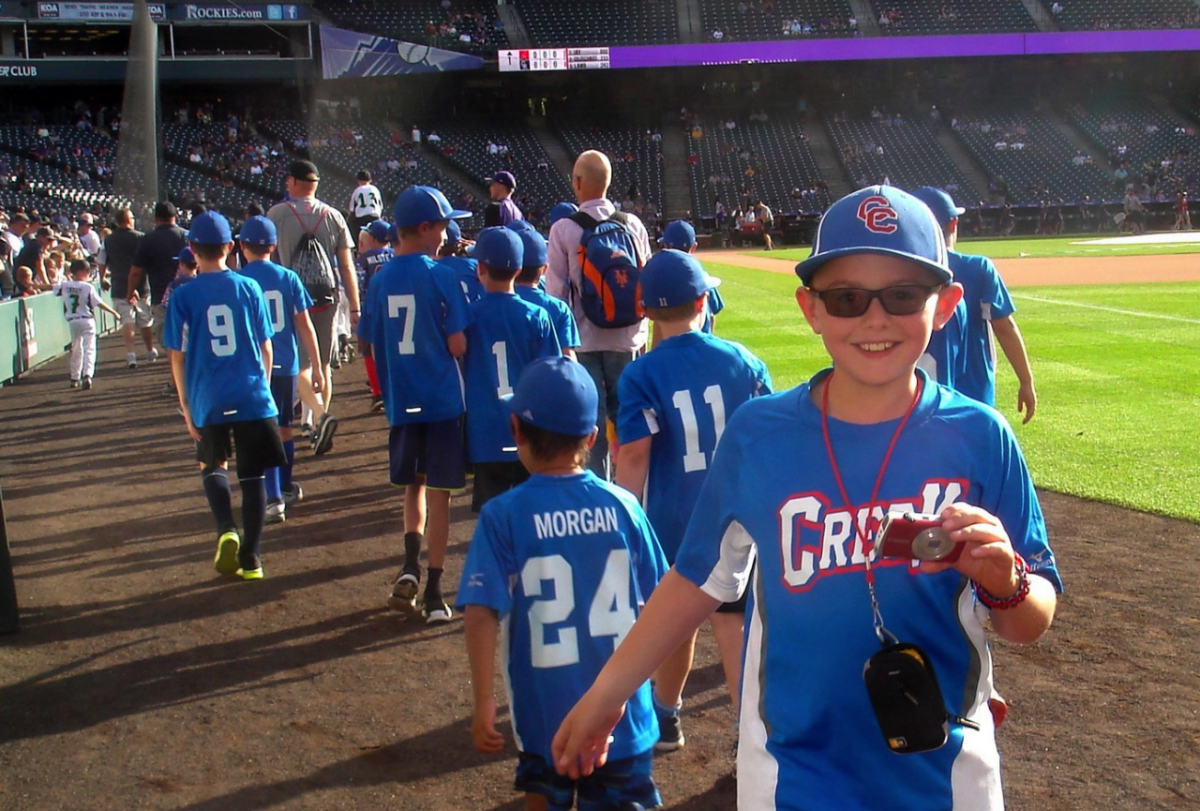
Much of my life has revolved around baseball. I was raised watching the Rockies at Coors Field. As a kid, the games on TV dictated my bedtime and their outcomes dictated my mood.
And I also grew up playing. Like many kids, I started t-ball at four and baseball at five. My springs into summer and summers into fall were crowded with games and practices.
The most exciting gifts used to be things like my first mitt for Christmas in 2013, a fresh box of baseballs on night three of Chanukah, or my beloved used Rawlings bat for my twelfth birthday. Fast forward 10 years, and I was looking forward to camera gear and SD cards around the holidays. I played my last baseball game the summer after eighth grade. Soon, new interests captured my attention—like journalism, which eventually led me to the staff of the USJ. But my love for the game didn’t die—here we are on episode 20. It’s not dead yet!
Living a life so intertwined with the game has made me realize how much I learn from it. Lessons that don’t just apply on the diamond.
Here’s one beautiful thing about baseball. 162 games a year gives 161 second chances. Baseball teams lose all the time. They get swept. Sometimes they go on losing streaks. But we see teams that go through rough patches in May or July make the playoffs regularly. Why?
Because “the mental game” is a huge part of baseball. But “the mental game” isn’t just about baseball. It’s not just sports, for that matter. Getting out of a slump or beating the odds in an away game are all a matter of confidence and attitude. Hitting deadlines or overcoming the intense challenges of our journalistic work is no different.
Beyond attitude, even the niche bits of baseball could be applied to life more broadly. And they can be applied to the work of journalism specifically.
I remember learning about sacrifices as a young player. Sometimes, rather than hacking at the ball, the hitter humbly turns his bat parallel to the ground and lays down a bunt. Or, rather than swinging for the fences, they simplify their motion, electing to hit a sacrifice fly.
These are valuable plays. They move baserunners forward, making your teammates 90 feet closer to scoring. We reward them statistically, too. Rather than marking them as an out, they’re negated from the batting average calculation, as to not hurt a player for helping their team.
Over my years on the USJ, I saw the same sacrifices from my peers. I saw my advisors, Seth Fine and Joya Haskin, devote passion and time to teach us the craft; they would never be awarded a byline or a writing award. I saw my Editor-in-Chief Quinn Rudnick stay up hours into the night, painstakingly editing our magazine to make sure our work came off the press in its best possible form. I saw my co-Editor-in-Chief Izzy Krauss balance massive responsibilities, from school to work, while also being a nurturing presence to our class each day. Their sacrifices are seldom recognized. Baseball taught me to value them, and model my own character and work ethic after them.
I learned from my teammates because it’s a team game. A lineup has nine spots. You can change field positions on defense, but players can never change their place in a lineup. Herein lies another important lesson. The star player only occupies 1/9 of that batting order. If every member of your team isn’t prepared for the moment, the whole team suffers.
Each quarter, the USJ staff works tirelessly to complete our 24-page magazine. Each page has a completely unique set of writers, designers, photographers, artists, and editors working to make it engaging and appealing. Baseball taught me to trust my teammates, to take up my one lineup spot, that the team works best as a team.
Maybe I sound like a nut trying to draw such deep meaning from this game. But that’s why baseball has persisted. That’s why it’s a pillar of American heritage, in our storytelling and our history. That’s why we stick with the game.
Baseball might have taught me these lessons. But at its core, it’s a game. Journalism, for me, did something even more important: it showed me that being a teammate isn’t just something you do on the field. It’s in the hallways, it’s in the classroom, it’s in the newsroom.
To the staff and advisors of Union Street Journal: thank you for being my teammates.