
2026 is a huge year for international athletic competition. Feb. brought the 25th Winter Olympics in Milan-Cortina, Italy. This summer, North America hosts the 23rd World Cup at locations across the U.S., Canada, and Mexico. And, sandwiched in between them, in March, the runt of the three: the World Baseball Classic (WBC).
Compared to these titans of international competition, the WBC simply feels lacking. It doesn’t get the attention. It doesn’t get the viewership. It almost feels like spring training on weak steroids.
Originally designed with the same amateur-only standards of the Olympics, the Baseball World Cup was a showcase of international talent. In 2005, the MLB and its Players Association proposed a redesign, to be called the World Baseball Classic. The first competition under the WBC name was held in 2006.
Therein lies one big issue. They call it the World Baseball Classic, but it just doesn’t feel that way. It doesn’t have a legacy. The competition as it exists is just two decades old. Compare it to the World Cup, which has nearly a century of heritage. The Olympics, as they advertise, are more than ‘2000 years in the making.’ They have such an awestruck quality to them: an air of history and legends.
One traditional aspect of these competitions is location. With the Olympics, we stick to one city. The World Cup is all contained in one country (until 2026). We get to know a location. We learn about its history and culture.
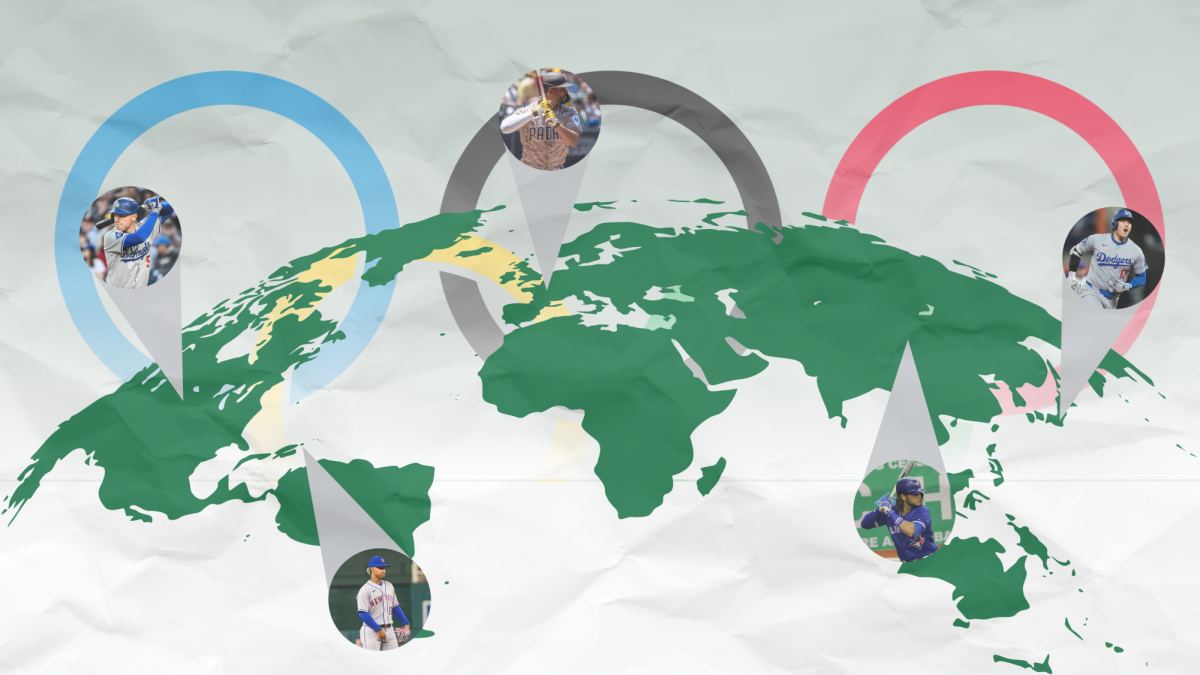
But the WBC is so decentralized. Its host stadiums are spread across oceans. In 2026, games will be hosted in Miami, Houston, Tokyo, and San Juan, Puerto Rico. It feels disorganized and too dispersed, and it’s because the smaller market size of the WBC doesn’t warrant high-budget planning or infrastructure of the other major international competitions.
Though its locations are worldwide, another huge issue is that it doesn’t embrace its multiculturalism enough. Baseball is a widespread sport with huge fanbases and roots in Latin, Asian, and American cultures, among others.
Some countries involve their native languages in their uniforms, like Czechia (Česko) and the Dominican Republic (República Dominicana), but that’s all the ‘diversity’ we got. Nike had strict cookie-cutter uniforms for the tournament. Simple three-color combinations, the same jersey pattern, just with a different font across the front. The uniforms of the 2026 WBC are atrocious.
The Olympics made jerseys so much better. Take hockey—2026 featured so many gems. The U.S. uniform was classic, nostalgic, and timeless. Canada’s simple blackout leaf design was a work of art. Finland, Latvia, Slovakia, Germany, Sweden, Switzerland: They featured colors and elements clearly created to reference their own cultures, not fit some corporate design language.
The 2026 uniforms were also a letdown because 2023 was so much better. Puerto Rico had a beautiful design referencing the silhouette of Cape San Juan. Venezuela was vibrant and eyecatching in its flag’s colors. Panama featured the logo of their own national baseball governing body FEDEBEIS. Authentic local touches are lost once Nike’s executives take control.
2023 did show a shift in WBC popularity. For the first time, in-person viewership surpassed one million total over the tournament. But it’ll never come close to the other pinnacle events. It’ll always feel small-market and unimportant. Global viewership of the Paris 2024 Summer Olympics was five billion. Even in the big finale of the 2023 WBC, the championship game between the U.S. and Japan, American viewership peaked at only 6.5 million (that being said, Japan viewership reached around 62 million).
Of course, there is so much validity in the idea of the WBC. By all means, a competition like it should exist. But the WBC isn’t the right way to grow the sport to new international audiences. Unlike American football, it is an international sport. The way to solve this is some colossal event with a huge pre-existing viewership base. The easy fix: add it to the Summer Olympics permanently again. But I already wrote a whole article about that.