MUSIC
One thing 2016 got perfect was undeniably music. Albums expressed themes of pain, love, and perseverance that dove into the experiences of women, people of color, and family, and those songs continue to be comforting and relatable.
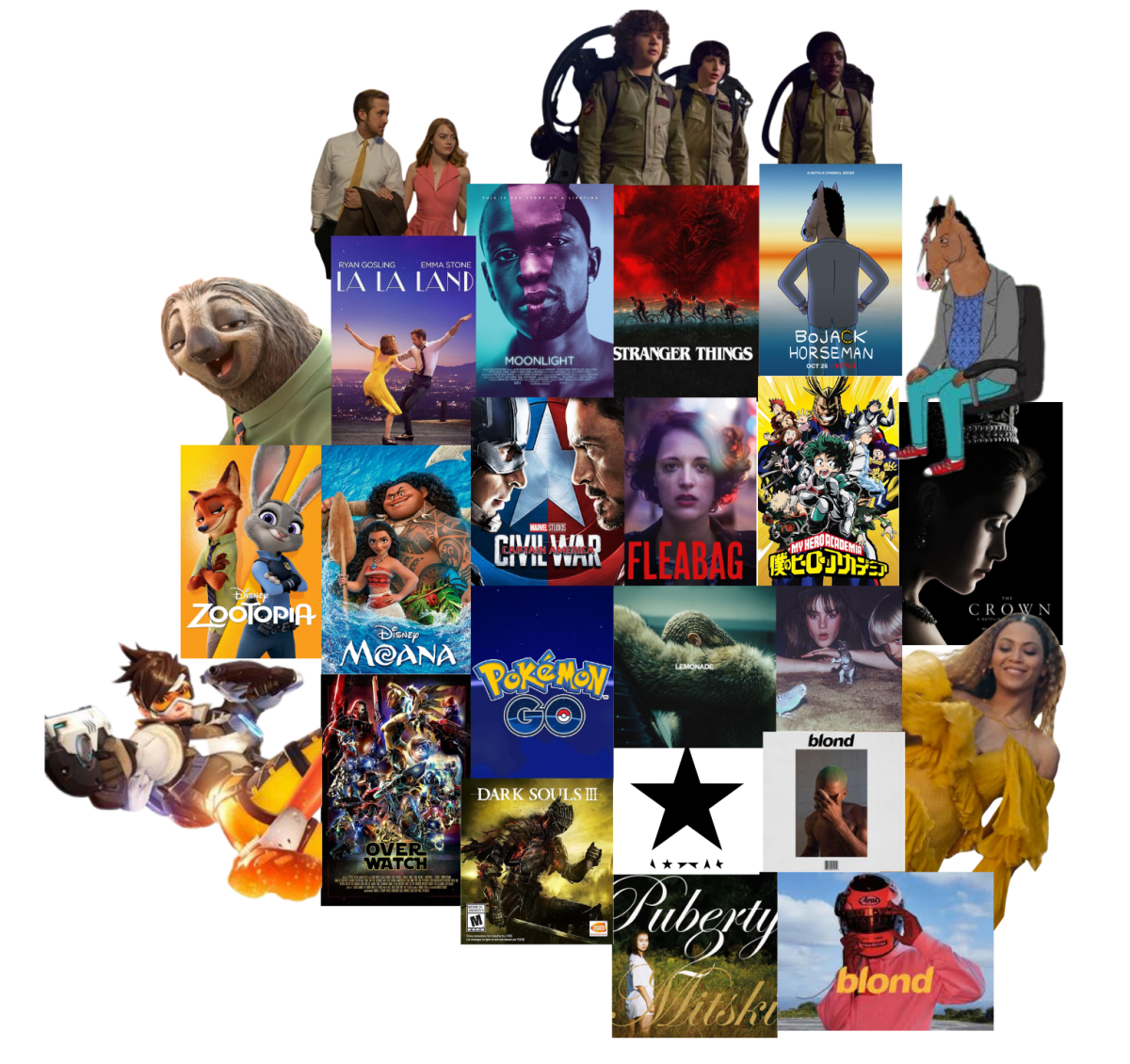
“Lemonade,” Beyonce’s sixth album, was a rollercoaster that covers themes of betrayal and the Black female experience in America. Frank Ocean’s “Blonde” was a soul-filled album that dove into lost love and adulthood with ambient soundscapes and has yet to release another album since. Genres like R&B, hip-hop, and pop have been defined by these albums and their success and continue to see it decades later. “Blackstar,” David Bowie’s final album was released two days before his death in Jan. 2016. It finalized his legacy and the social revolution he brought to the world. “Masterpiece” was centered on love and abuse with a grunge overtone to it, leading to breakout and sustained success from Big Thief in the decade following the album’s release.
Music has always been some of the most relevant and original aspects of media, and 2016 only ever added to the magic. Artists in 2016 actually made albums long enough to tell a real story. But in 2026, music lacks the elements that make it significant. Nowadays, albums are short and songs mostly become super popular through 15-second excerpts on social media. Songs from 2016 have trended on social media for years and continue to be discovered among the growing youth. But now, songs are easily overplayed and fail to reach the level of influence and freshness 2016 had.
TV SHOWS
Countless shows were so memorable that they not only became some of the most popular TV shows of all time, but paved the way for modern pop-culture.
Over 19 million more people signed up for Netflix after the release of the hit show “Stranger Things.” As the show developed in romance, friendships, and plot, each season release became dates of crazed anticipation. “The Crown” is one of the most praised Netflix dramas as it told the complete story of Princess Diana and British royals with realism and impeccable acting. “Fleabag” was a refreshing comedy-drama following the life of a woman as she chaotically navigates life, loss, and laughs in her relationships. In the acclaimed third season of “Bojack Horseman,” the tables turn from comedy to darkness as Bojack (Will Arnett) delves into struggles of mental health, grief, and depression in not only Bojack himself, but also in his relationships. The ever-iconic anime, “My Hero Academia” began as it followed Izuku Midoriya (Daiki Yamashita) maneuvering a world of powers and the morality of a true hero. Ending with eight seasons total, the beloved show continues to have spinoff and movie releases today.
These shows went on to continue their own legacy with following seasons, controversial endings, and fandoms to last a lifetime. They made a lasting impact in TV expectations to influence and define the shows we watch today. Now in 2026, there are infinite options for people to watch. Everyone is watching something that caters to their interests. The shift from traditional TV channels to streaming services provide people a wider range of media with a scroll of their thumb.
MOVIES
2016 was the year of blockbusters and movies that felt like real events. Franchises like Marvel, Star Wars, and Disney all released films that broke the box office. These films were all perfectly engaging as they followed unpredictable plots, made the audience think, and were charged with political undertones that followed the time period of their release.
“Captain America: Civil War” transformed the idea of superhero movies as fans all over the world watched their favorite heroes split into two teams with varying political and moral views. “Moonlight” won the Oscar for Best Picture as it mapped the life of Chiron (Trevante Rhodes) working through his struggles with identity as he navigated being a queer, young Black man growing up in Miami. “Moana” dove into Polynesian culture as it told Moana’s (Auli’i Cravalho) story of restoring the soul of her home. These authentic themes of cultural identity and nature preservation demonstrated the beauty of the world. Despite being a children’s movie, the animal world of “Zootopia” successfully brought the reality of racism to light presented through a classic mystery.“La La Land” was a taste of musical and cinematic originality as it balanced true love and the pursuit of important artistic ambition. Becoming one of the most iconic modern musicals of all time, it paved the way for what society views and interprets love.
But today, these iconic franchises lean heavily on remakes, live-action adaptions, and sequels; it has made each release feel less significant and seem like weak attempts at nostalgia. 2016 had so many needed realistic portrayals of important social justice issues that remain relevant with a means for change.
GAMES
Many 2016 games are still considered revolutionary due to their never-before-seen mechanics, genre-changing stories, and originality. Now as staples in not only the gaming community, but also social media, these games rewrote the expectations of gamers around the world, even a decade later.
Published as an online first person shooting game by Blizzard, “Overwatch” was a first of its kind. With its roster of 21 different characters, specialized abilities, and lore, every character was detailed and had an important role. Its large-scale success came from its competitiveness and how it focused on the “hero aspect” of the team shooter genre, which eventually made it win the 20216 Game of the Year. In downloads, revenue, and active users, “Pokemon Go” quite literally broke the internet. Players were able to catch, train, and bond with their own virtual Pokemon, no matter where in the world they were. It encouraged people from all ages to get outside and connect with others and their personal Pokemon, and won the Best Mobile Game in the 2016 Game Awards.
In 2026, the gaming space has become set within the ways of micro transactions, online play, and many mechanics locked behind
paywalls in several Triple A studio games. Systems such as the introduction of in-game currencies and battle passes created a brand new way for studios to gain money from free games or to boost their revenue from paid games. From this, many players feel burnout from this as millions have moved away from gaming entirely after these industry wide changes.