
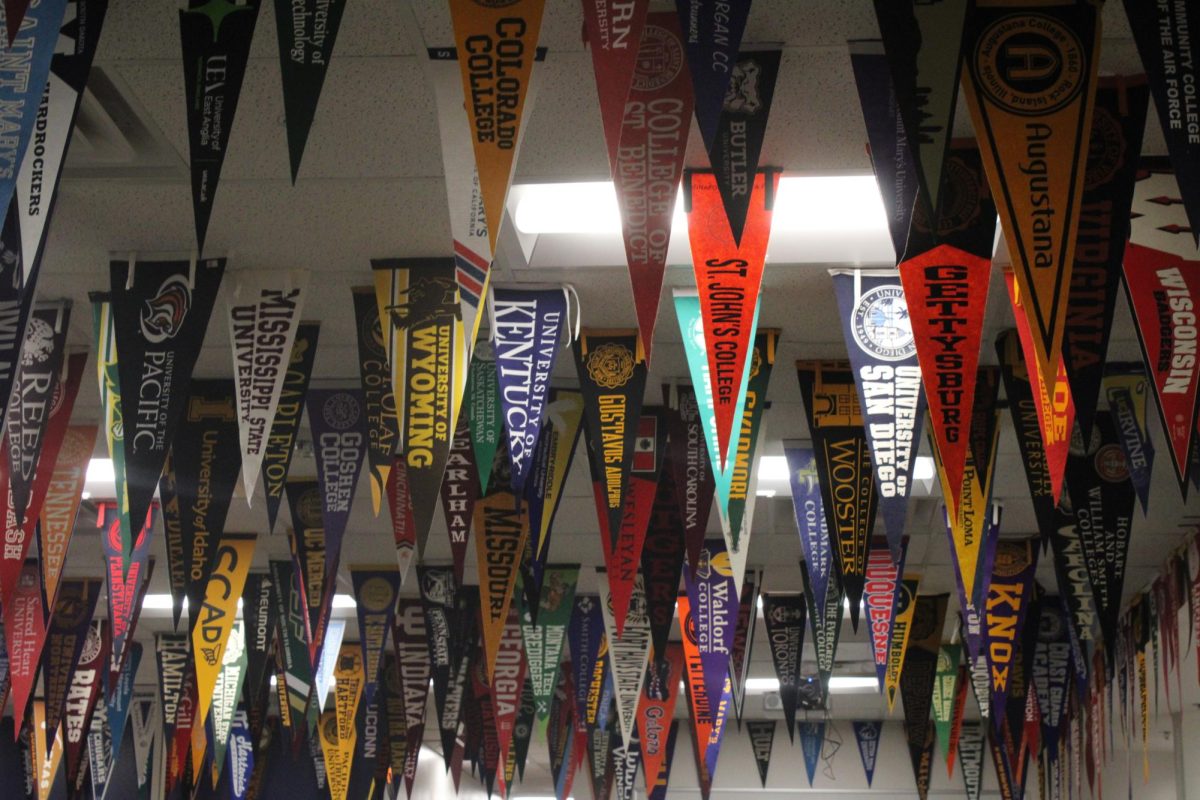
One of the most attainable dreams I made for myself in my childhood was to study journalism at Brown University.
Although it was far more realistic than my earlier dreams of being a princess, as I settled into high school, it became apparent that this goal was just as fantastical.
When I was 10, a 5.6 percent acceptance rate was merely a number, but after a few questionable grades my freshman and sophomore years, it possessed a deeper meaning—I would not be attending the university of my dreams. Becoming the Rory Gilmore of Brown was just as probable as finding a genie in an oil lamp.
Now as a junior, I question whether I’ll be able to get into colleges with an acceptance rate of 20 to 30 percent, let alone an Ivy League, and I have dozens of friends who feel the same way.
For generations, students could be admitted into top universities as long as they were dedicated, decently well-rounded, and maintained above-average grades.
Nowadays, students feel pressure to have a GPA above 4.0, play multiple sports, start clubs and nonprofits; you name it. No matter what you’re doing, there’s always something you’re missing that would make you more dignified in the eyes of a college admissions officer.
Even within the past decade, the standards to get into top universities have been raised to near impossibility, and students like me are struggling to keep up with their peers. Part of this is because the Common App and Early Decisions have become more popular, forcing colleges to lower their acceptance rates.
Social media is also not helpful in this scenario, making it easier for students to start idolizing schools. Postgraduate coordinator and counselor Craig Wittgrove speculates that colleges are simply being perceived as more selective because they have such a large presence in the media.
When students see a college romanticized online, it’s hard to see beyond the image of the school into the nuances of what it would be like to actually spend four years there. I fall victim to this consistently, envying Ivy League students ‘day in my life’ videos all over my feed and craving an identical lifestyle.
Since we were children, we have seen “name-brand” colleges glorified in all types of media.
Batman went to Princeton, Blaire Waldorf went to Columbia, even Elle Woods was able to finesse an acceptance into Harvard Law.
We have systematically been made to think that attending a prestigious university is the only way to prove our intelligence.
I used to believe that if I was able to wear the Brown logo across my chest and boast about my time at the university, all else would follow. I thought the only way to prove myself as bright was to attend a school that required a 1550 SAT for acceptance.
Falling behind in a couple of classes near the beginning of high school helped me realize that there is a lot more to life than becoming a textbook student. If I pushed myself to my breaking point, there would be a higher chance for me to pursue my dream of attending Brown, but how much value should I put on that goal? At what point will my academic successes begin to define me?
It is extremely important to have goals throughout high school that you nurture, but it’s even more important to learn that not everything has a linear path, and not everything is going to fall perfectly into place.
Think of the smartest, most successful person you know; maybe they did receive a brilliant education at a nationally ranked university, but that didn’t automatically set them up for success in the real world.
A university with an impressive acceptance rate, a century-old stone campus, and a dozen political activism pottery classes doesn’t ensure a perfect college experience. Although it’s hard to look past what is considered an honorable education, there are countless options for dedicated students.
An education is an education,. Attending a college that will put you six figures in debt by the time you’re 20 isn’t the best option for everyone (or the smartest option either, if we’re being honest).
The most important thing is to realize that no matter where you are there is still something to be learned.