
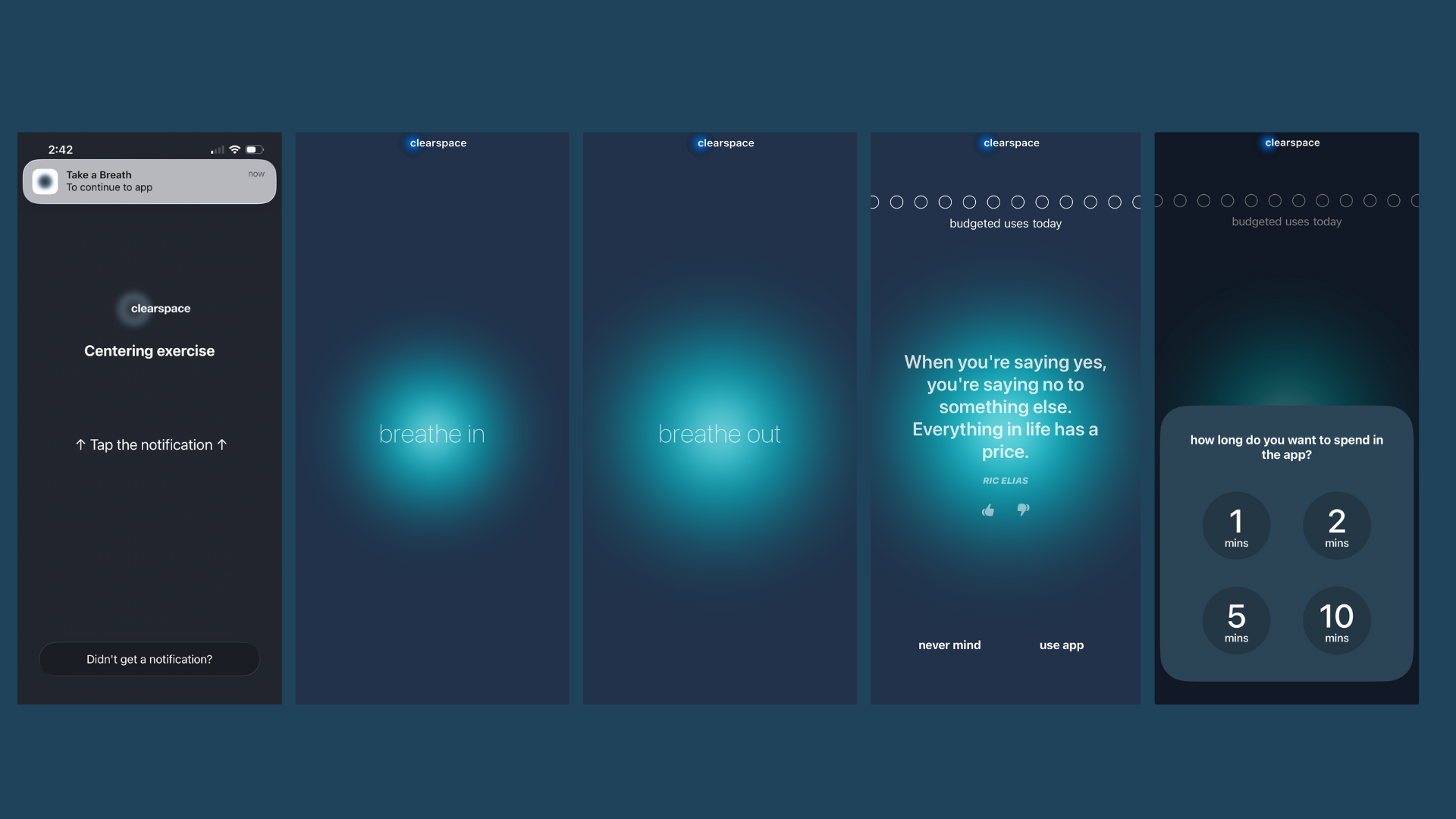

After Project Reboot visited Creek to give a presentation on using smartphones more intentionally, many students were introduced to an app called Clearspace. The strategies discussed during the presentation connected directly to how Clearspace works: the app helps users gain control over their phone use by reducing distractions and social-media “doom-scrolling.” It allows people to block or limit specific apps, and even set schedules or time limits for when those apps can be used.
For some students, though, phone usage isn’t just about the hours they spend online—it affects their motivation and mindset long after they stop scrolling. Apps like Clearspace aim to encourage productivity, but many students feel the impact of constant phone use runs deeper.
“ It just took so much time, and I’d say even more than just time usage. It just got me out of the mood to do anything productive for a long period of time,” sophomore Peter Rasmussen said. “It would just put me in the wrong headspace, I just really couldn’t focus well after [scrolling].”
Because of experiences like these, Clearspace incorporates features meant to interrupt automatic behaviors. The app requires users to pause, breathe, or reflect on their intentions before opening a distracting app—small steps designed to create awareness in the moment.
“They create microinterventions on the application itself,” said Hailey Wright, the Project Reboot Head of Educational Partnerships.
Students say these microinterventions quickly become noticeable in their daily routines.
“When I try and open the apps, it’ll tell me to breath,” senior Caroline Jesperson said. “It just slows me down. Definitely at the beginning I would notice that when I sat down I would just default open the app but then it asks me ‘why are you doing that’ and I would ask myself why am I doing that and go pick up a book instead,”
Along with reflective prompts, Clearspace includes more interactive options that make students think twice before scrolling — some even involving physical activity.
“It was like a pushup for every minute that you scroll, and I think the fact that you actually have to work for it really stopped me,” Rasmussen said.
The app isn’t just about limiting screen time. It also incorporates educational elements meant to help students build sustainable, long-term habits.
“The micro learning curriculum is a way to decrease time,” Wright said. “It’s designed to create the behavior of breaking the compulsiveness.”